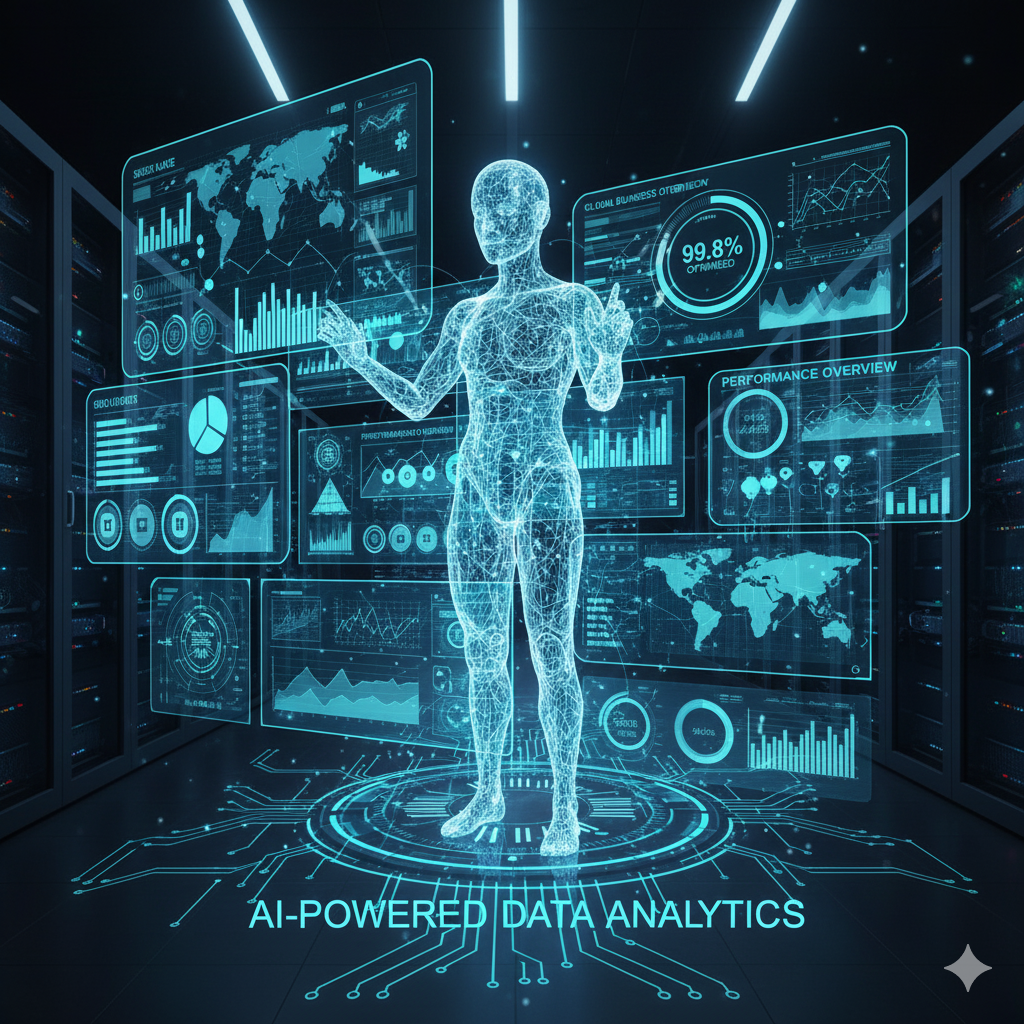

Artificial Intelligence (AI) has moved beyond being a futuristic concept and has become a powerful force shaping modern businesses. From startups to global enterprises, organizations are increasingly relying on AI-driven systems to make faster, smarter, and more accurate decisions. The ability of AI to analyze massive volumes of data, recognize patterns, and predict outcomes is redefining how companies operate and compete.
One of the biggest advantages of AI in decision-making is its ability to process data at scale. Traditional data analysis methods often struggle with unstructured data such as emails, social media posts, images, and videos. AI technologies like machine learning (ML) and natural language processing (NLP) can analyze this data in real time, providing actionable insights that were previously inaccessible. This enables businesses to identify trends, detect anomalies, and respond quickly to changing market conditions.
AI is also playing a crucial role in predictive analytics. By learning from historical data, AI models can forecast future outcomes such as customer behavior, sales trends, and demand fluctuations. For example, retail companies use AI to predict which products will be in demand during specific seasons, allowing them to optimize inventory and reduce waste. Similarly, financial institutions leverage AI to assess credit risk and detect fraudulent transactions with greater accuracy.
Another major impact of AI is in automation. Repetitive and time-consuming decision-making tasks can now be handled by intelligent systems. AI-powered chatbots, for instance, can resolve customer queries instantly, while recommendation engines suggest products or content based on user preferences. This not only improves efficiency but also allows human employees to focus on more strategic and creative tasks.
However, adopting AI also comes with challenges. Data quality, ethical considerations, and transparency are critical concerns. Businesses must ensure that AI models are trained on unbiased and accurate data to avoid flawed decisions. Moreover, organizations should maintain human oversight to validate AI-generated insights and ensure accountability.
In conclusion, AI is transforming business decision-making by enabling data-driven strategies, predictive insights, and intelligent automation. Companies that embrace AI responsibly and strategically will gain a significant competitive advantage in today’s fast-paced digital economy.