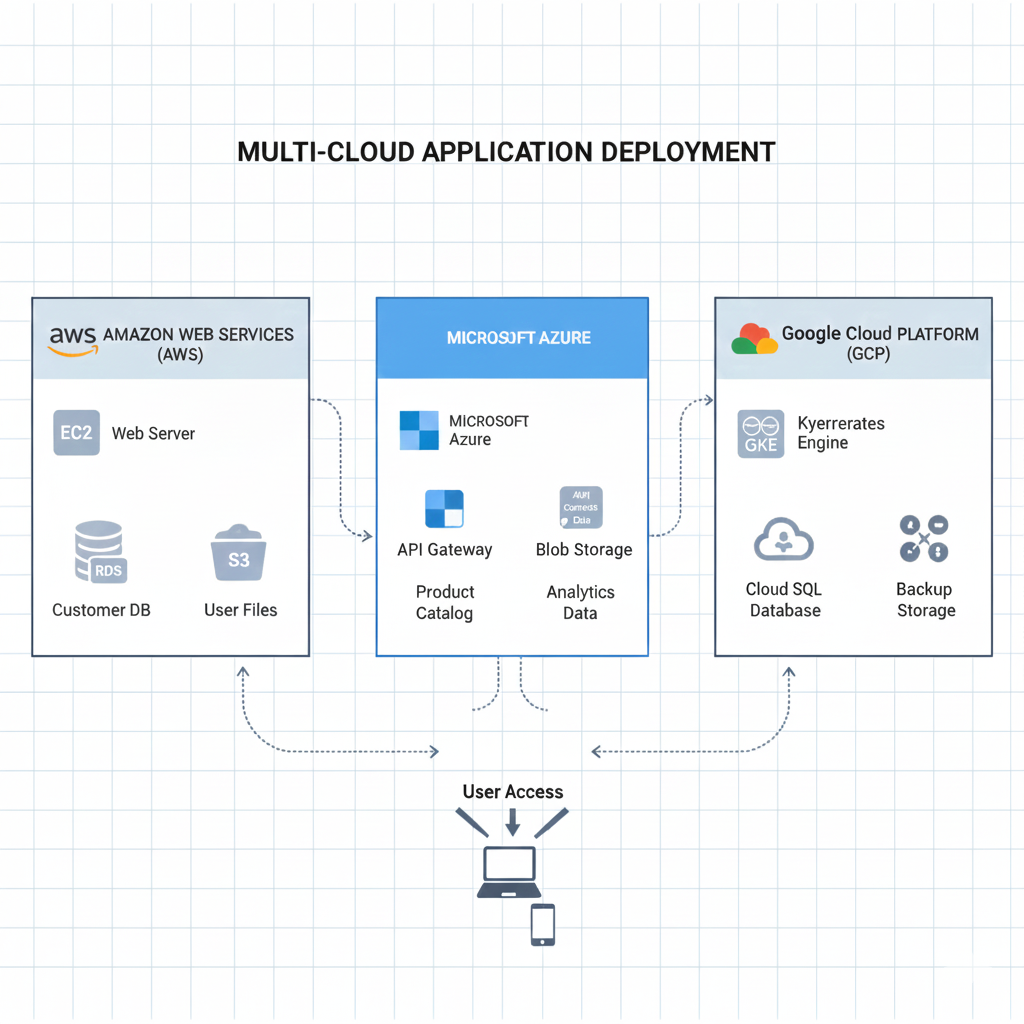

As businesses become more digital, many are moving beyond single cloud providers and adopting a multi-cloud strategy. Multi-cloud involves using services from multiple cloud vendors to optimize performance, cost, and resilience.
One major benefit of multi-cloud is vendor independence. Organizations avoid lock-in by distributing workloads across providers. This flexibility allows businesses to choose the best services for specific needs, such as analytics, AI, or storage.
Multi-cloud also enhances resilience and reliability. If one provider experiences downtime, workloads can shift to another, minimizing disruption. This is especially critical for mission-critical applications.
Cost optimization is another advantage. Businesses can compare pricing models and move workloads to the most cost-effective environment. Performance can also be improved by deploying applications closer to end users.
However, multi-cloud strategies come with complexity. Managing multiple platforms requires advanced skills, monitoring tools, and strong governance. Security policies must be consistent across environments to avoid vulnerabilities.
Best practices include standardizing architectures, using cloud management platforms, and investing in staff training. When executed properly, multi-cloud enables agility, innovation, and long-term scalability.